Inspect and prepare
The bort is checked and maintained before the active season.
 Contact
Tree-hollow honey from Bashkortostan. One harvest a year, in autumn.
Ishimbay / Burzyan
Bashkortostan
Bortevoy — honey from a living tree.
Ishimbay / Burzyan
Bashkortostan
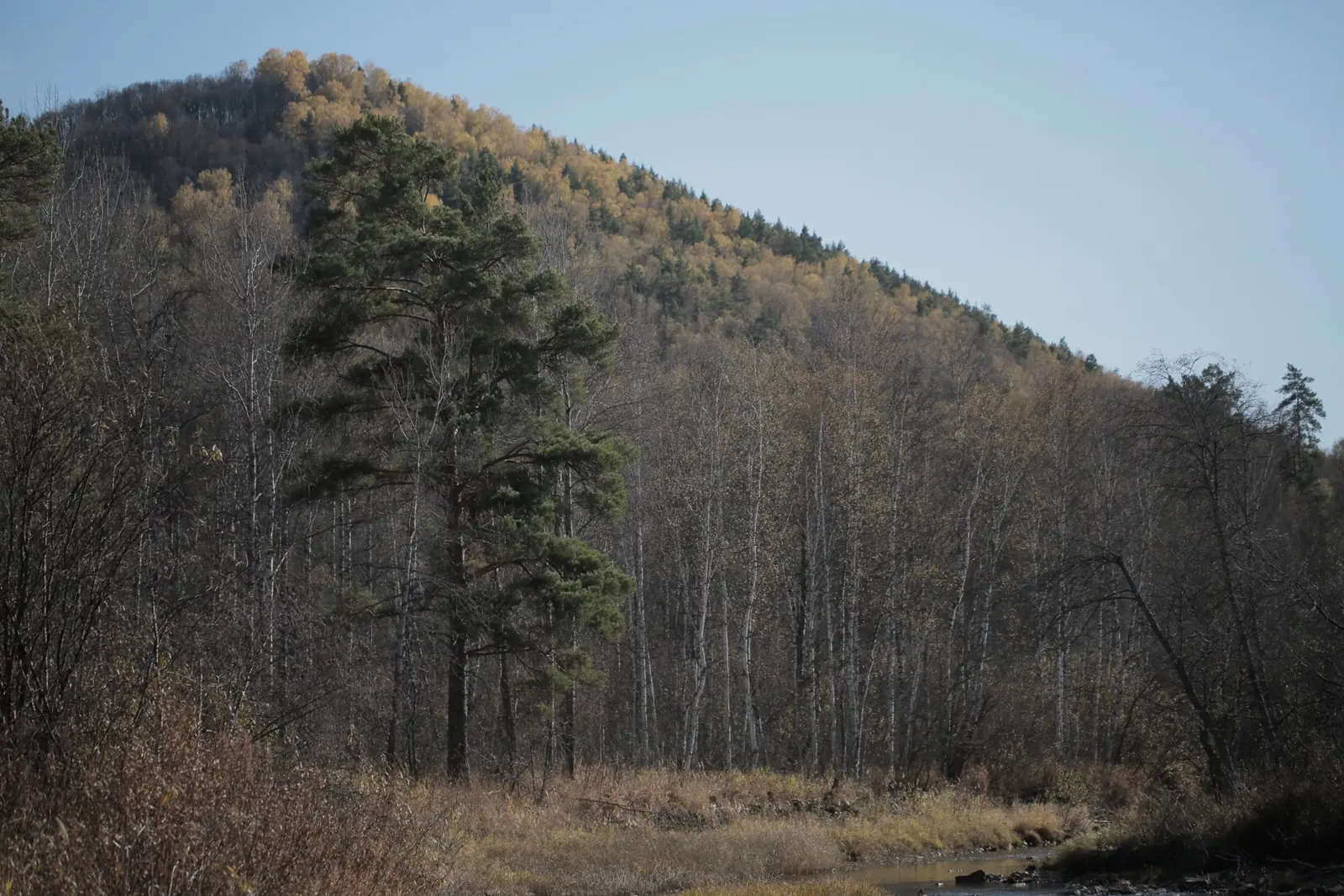
The Southern Urals. Pine forests, mountain slopes and river valleys. Here, tree-hollow beekeeping is connected not only to the bees, but also to the tree itself: inside its trunk, the beekeeper prepares a space for a bee colony.
Prepare the equipment, climb to the bort, inspect the comb and carefully gather the honey. The field record takes a closer look at these steps.
 01 / 03
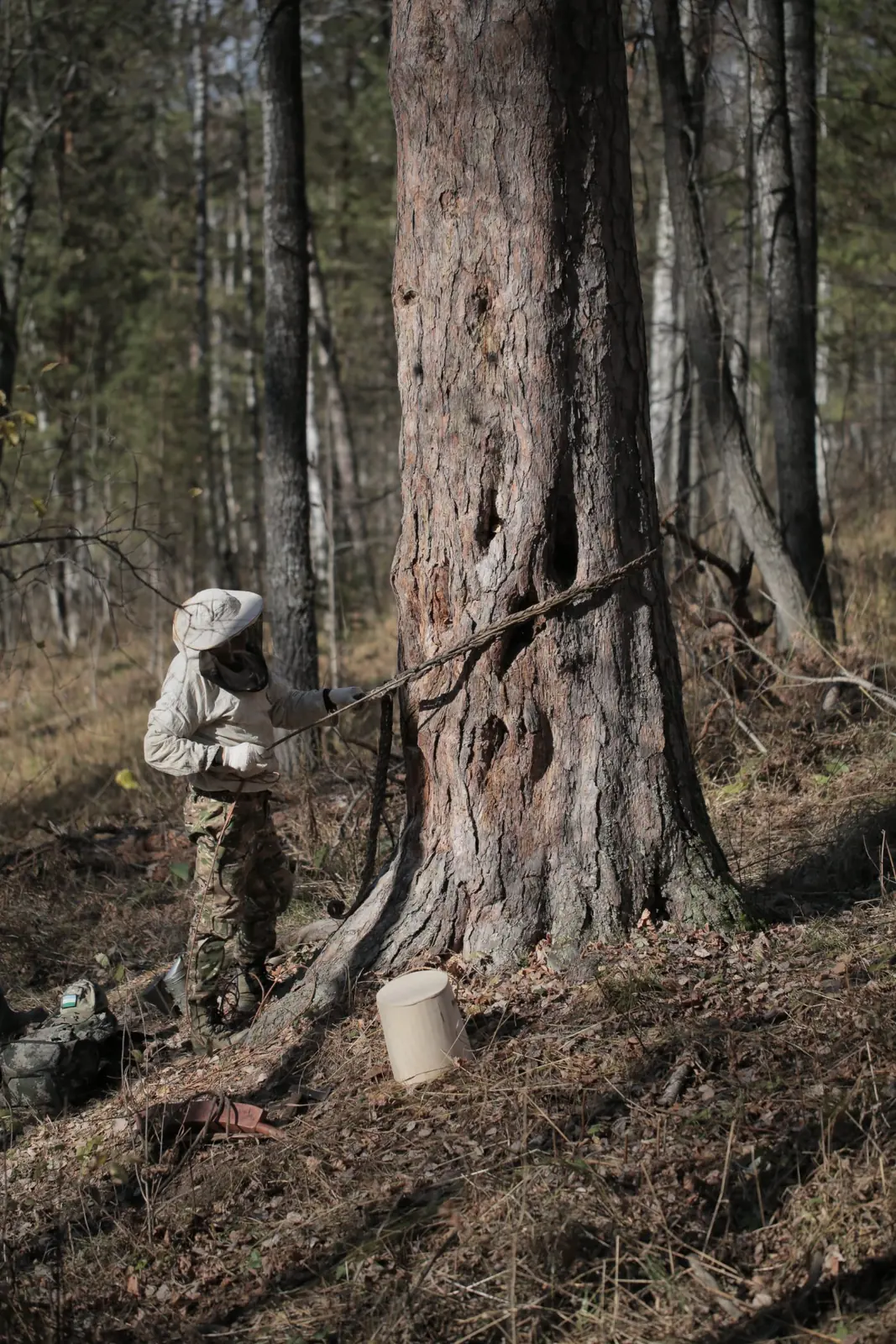
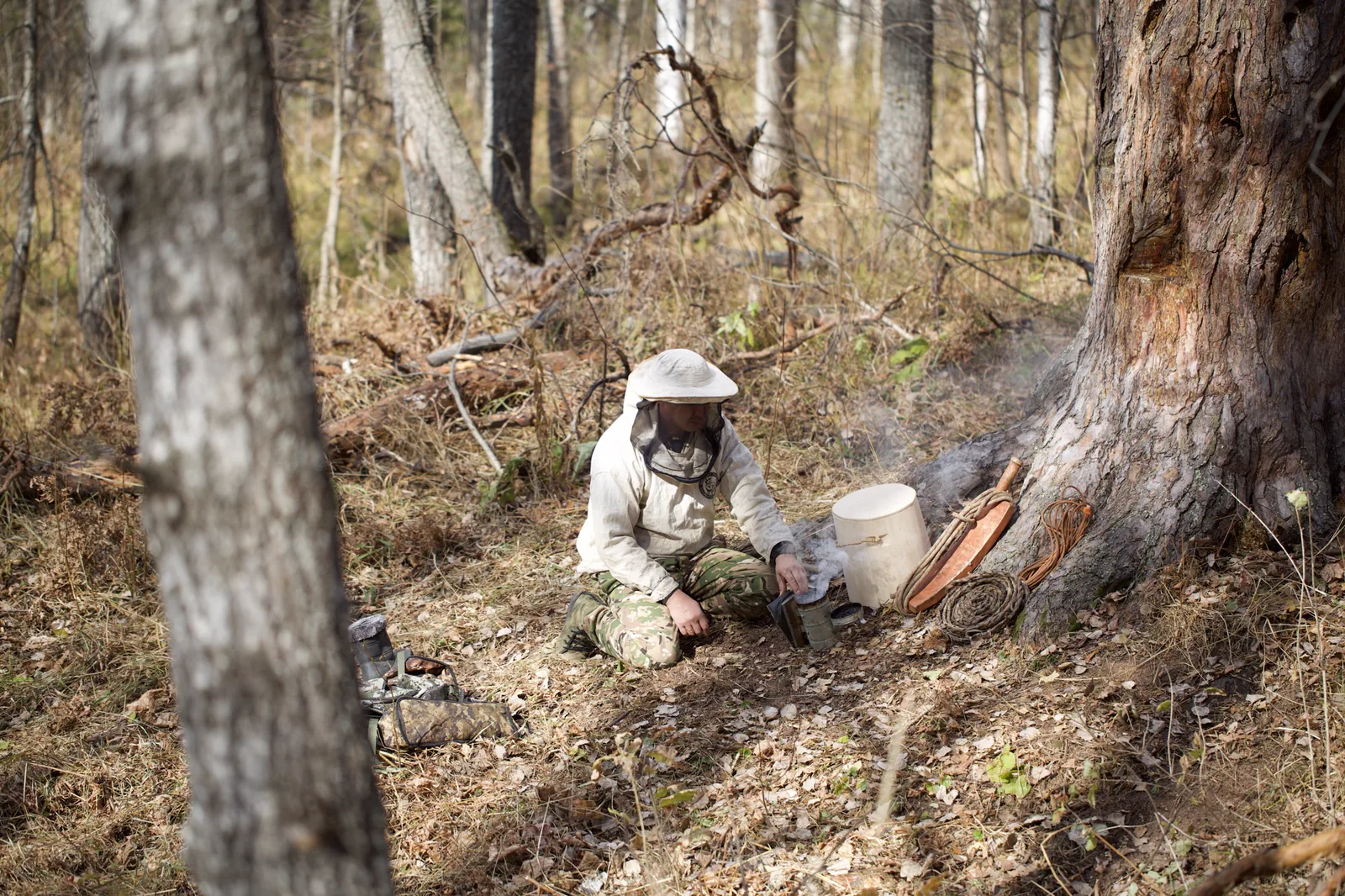
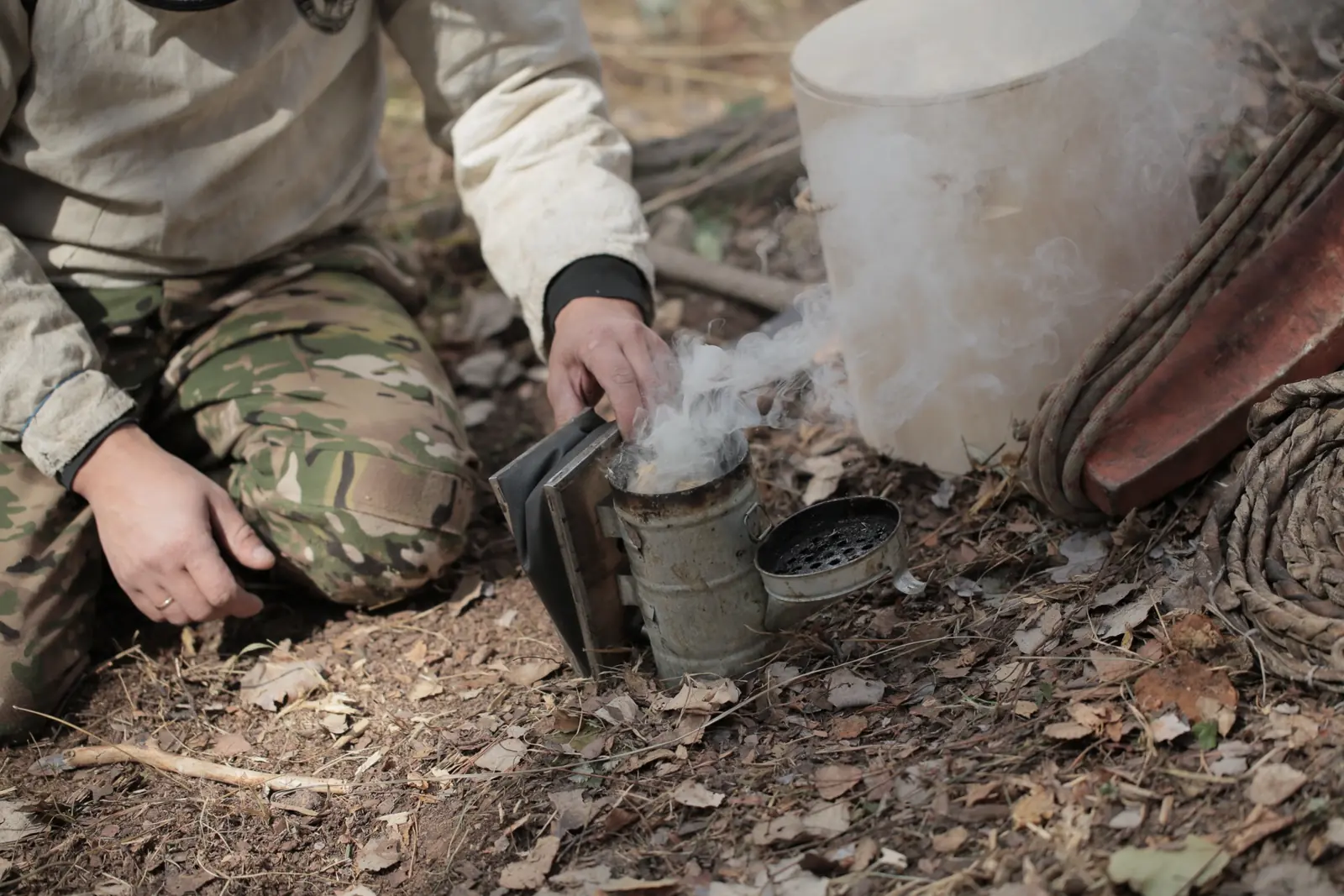
A smoker, ropes and a lime-wood batman: each has a purpose. The smoke keeps the bees away while the keeper works at the bort.
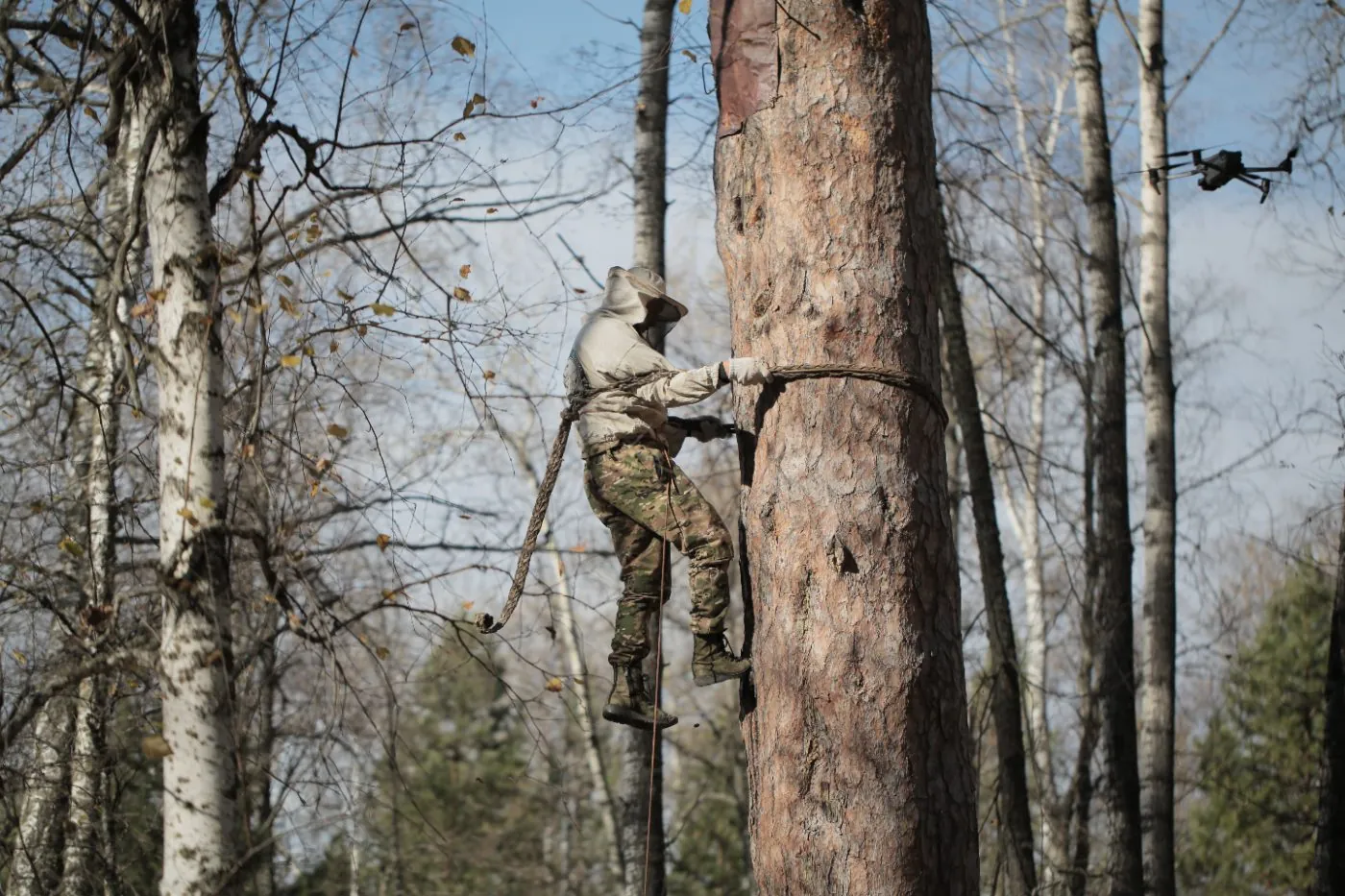
The keeper climbs using a kiram, a strap that wraps around the tree. Tools are passed up on a rope.
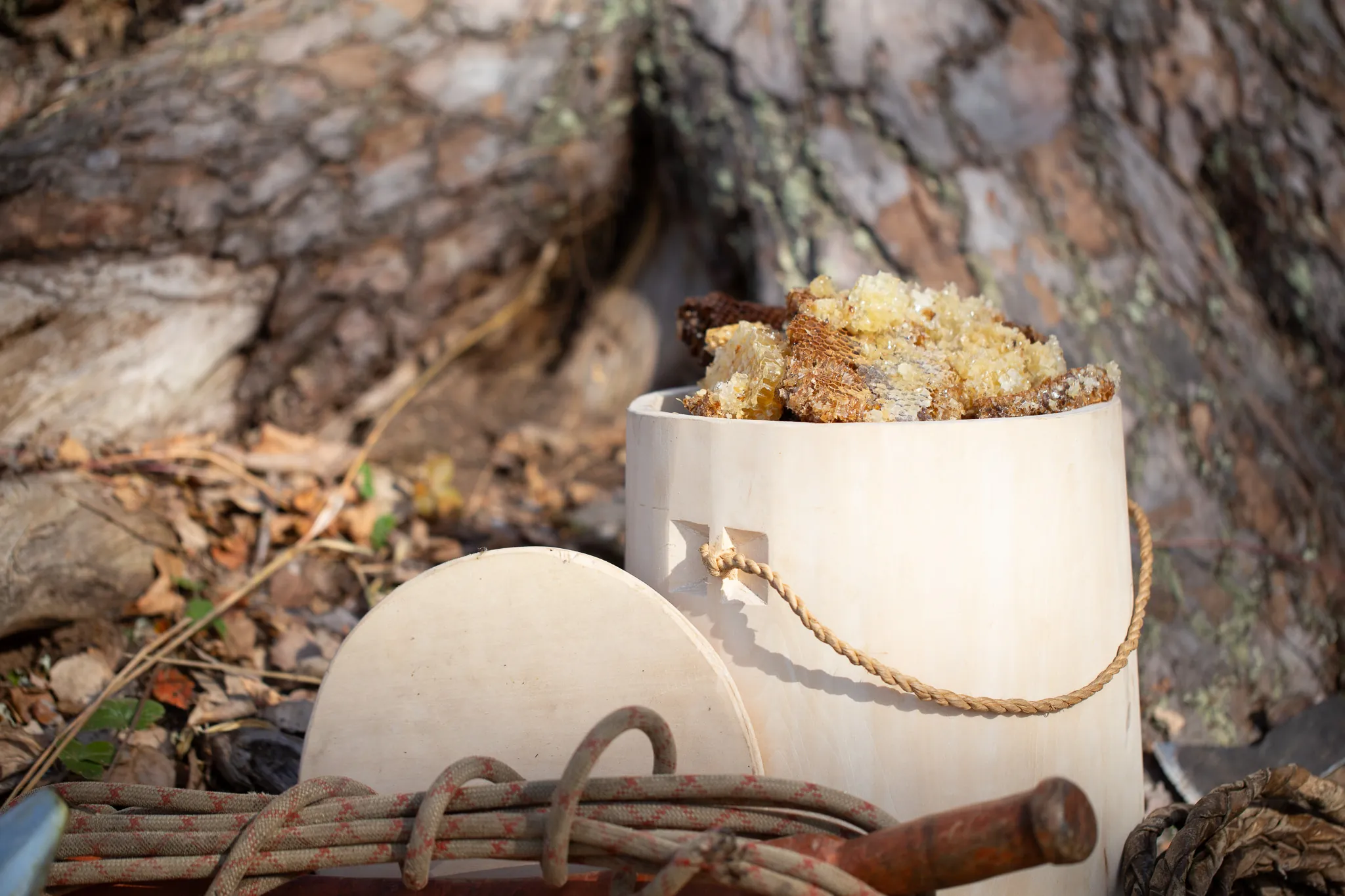
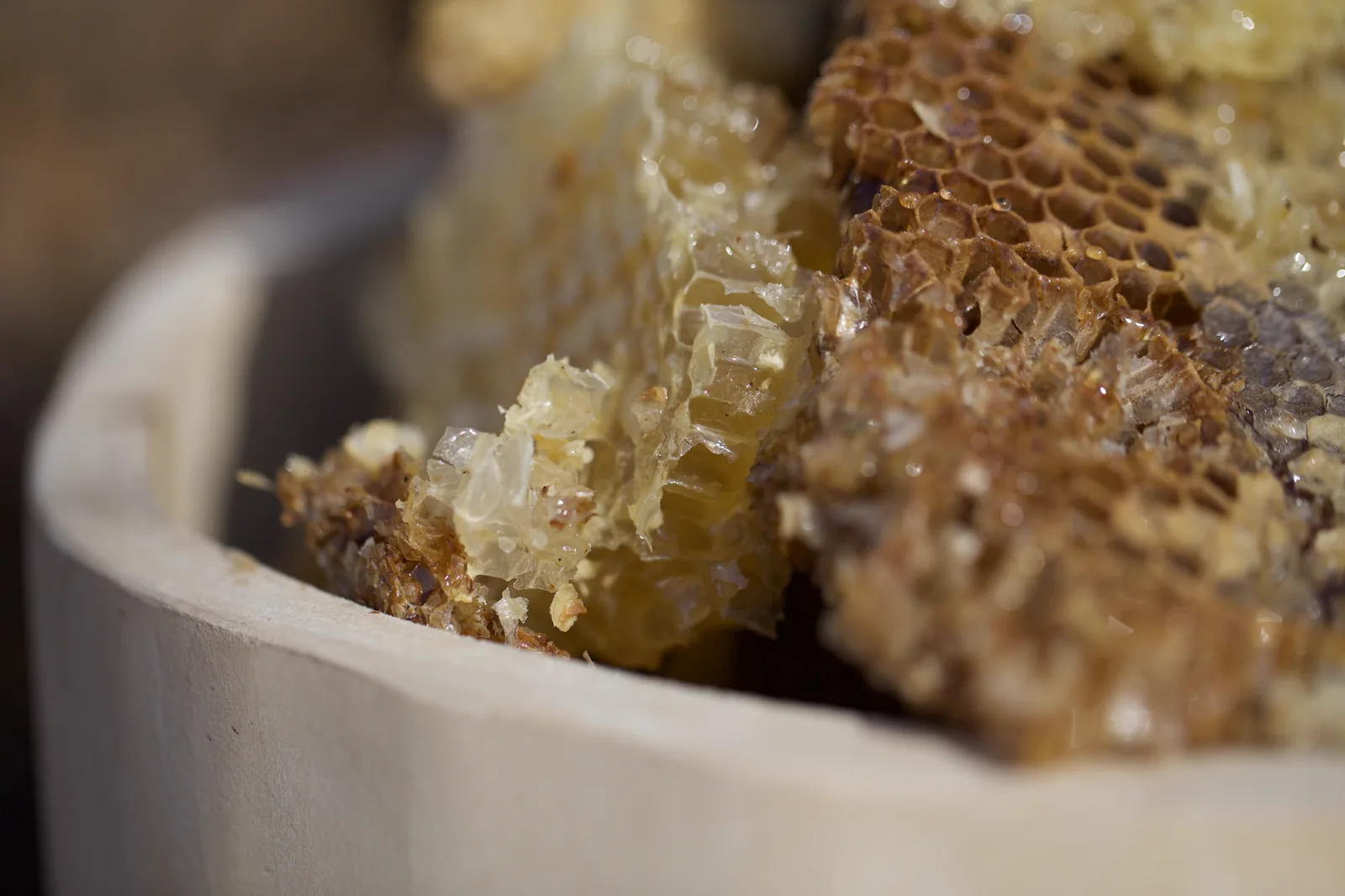
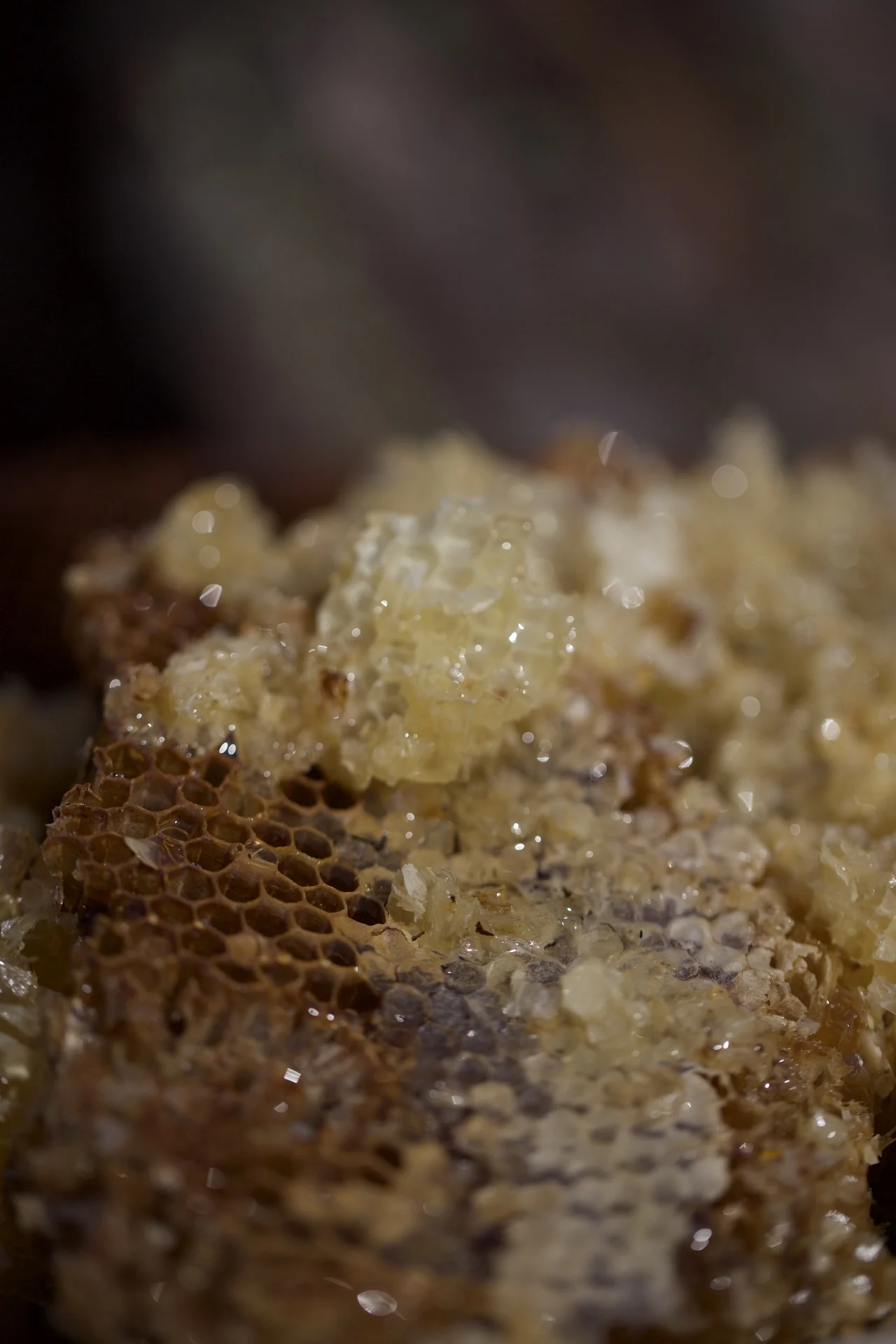
The gathered comb is lowered to the ground in the batman. The photograph shows honey still in its wax comb, before pressing.
Four short chapters trace what was inherited, how the tamga carries memory, the path the honey takes and which principles still guide the craft.
01Tradition
Tree-hollow beekeeping existed long before Bortevoy. It is a craft in which knowledge passes from generation to generation, and behind every bort lie years of experience, patience and respect for nature.
We created Bortevoy to give this tradition a future: to preserve its authenticity, tell the stories of the people who carry on their ancestors’ work, and introduce the world to rare honey born inside a living tree.
02Tamga and continuity
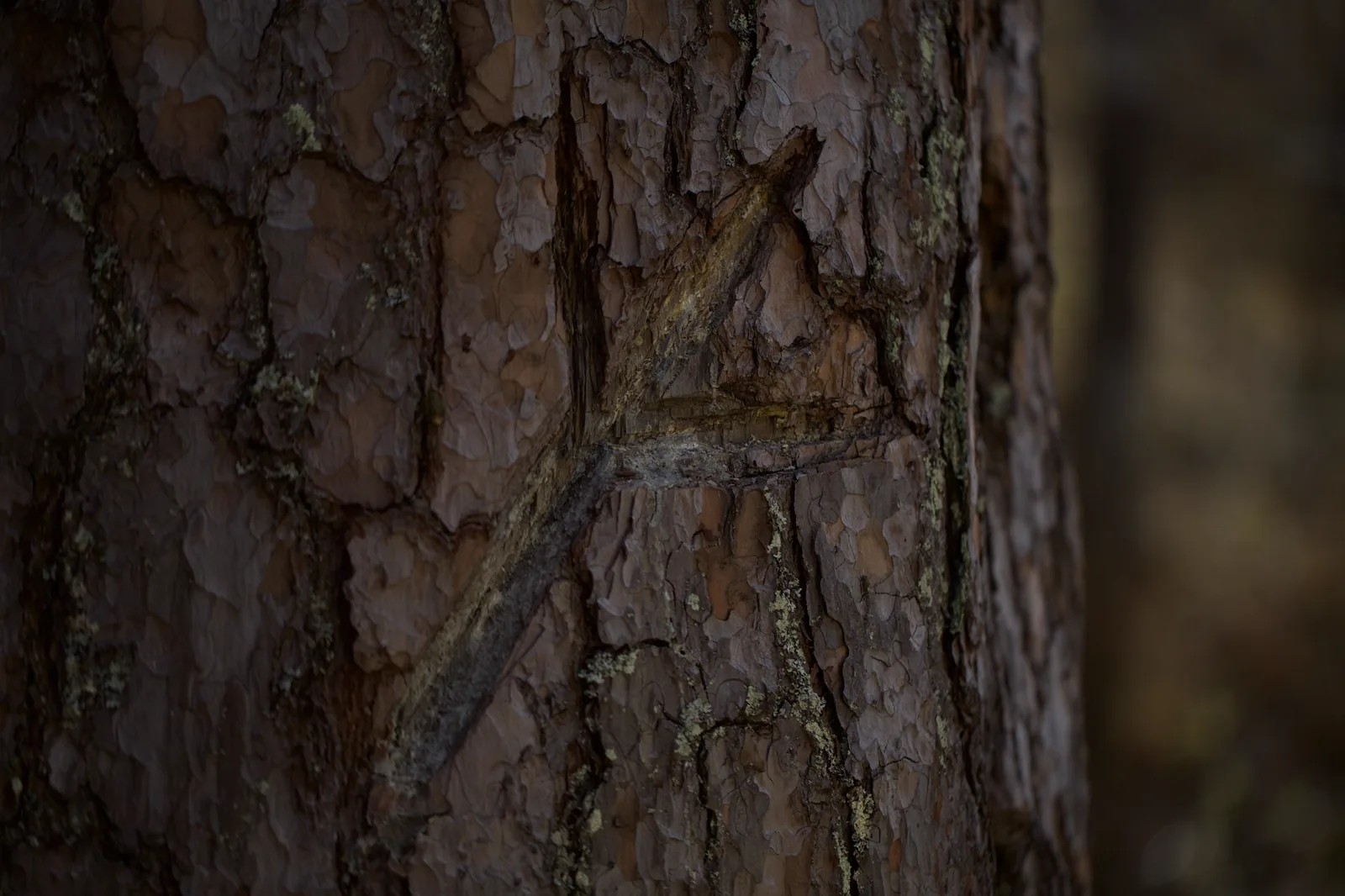
A tamga cut into the bark is a keeper family’s mark. It identifies the family tending the tree. In “A day at the bort”, Anur, a hereditary bort keeper of the seventh generation, speaks about the future of this family craft:
“Just as my father passed his skills on to me, I want to pass this art on to my children.”
Anur · “A day at the bort”, 1:18
03Tree to jar
The route is slow and direct. One tree, one working day, and no attempt to speed up what the forest determines.
04Principles
What is deliberately left out matters as much as what is done. These four boundaries keep the origin and method legible.
A working day at the bort — from the morning fog to honey on the table — and a short film on how a bort is built. In the first film, pick a chapter to jump straight to it.
The video could not load. Press “Watch film” to try again.
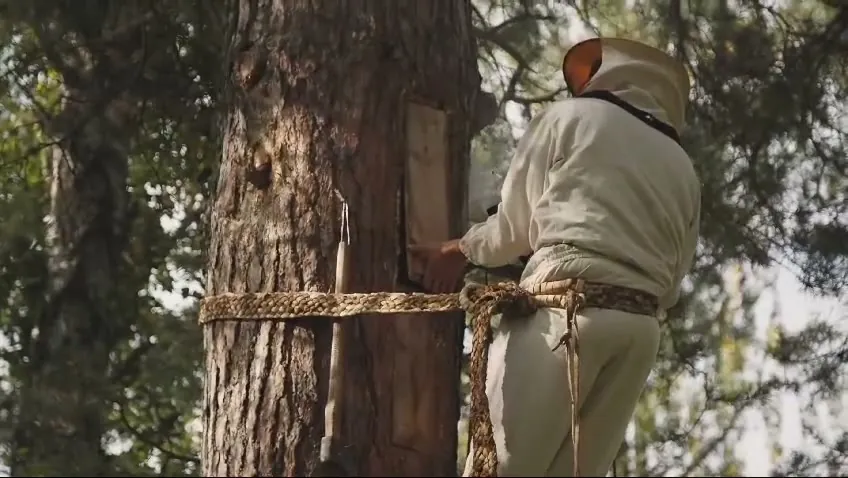
Filmed up at the bort: the beekeeper shows the bees’ entrance and the dolzheya, an opening in the trunk closed with wooden boards.
Before harvesting, the lower board is removed. Honey is taken from the lower part of the hollow, while the upper stores are left for the bees through winter.
The video could not load. Press “Watch film” to try again.
The bort is checked and maintained before the active season.
Through summer, the bees build comb and gather their honey stores.
The keeper opens the dolzheya, removes part of the comb and lowers it to the ground.
Part of the honey stays in the tree as the colony's winter food.
It is taken from a bort, and the amount cannot be increased: it depends on nature, the season and the life of the bee colony.
Unlike conventional apiary honey, it is gathered using traditional methods that preserve the natural rhythm of forest life.
Honey contains natural enzymes, organic acids and antioxidant compounds. Their levels depend on its origin and processing, which makes the way it is gathered especially important.
Its value lies in its rarity, natural composition and a craft carefully preserved across generations.
For us, it matters not only to say where this honey comes from, but to show its path.
The archive contains photographs of equipment, a tamga and the climb to the bort, alongside footage of work high in the tree. Choose a record to explore the details.
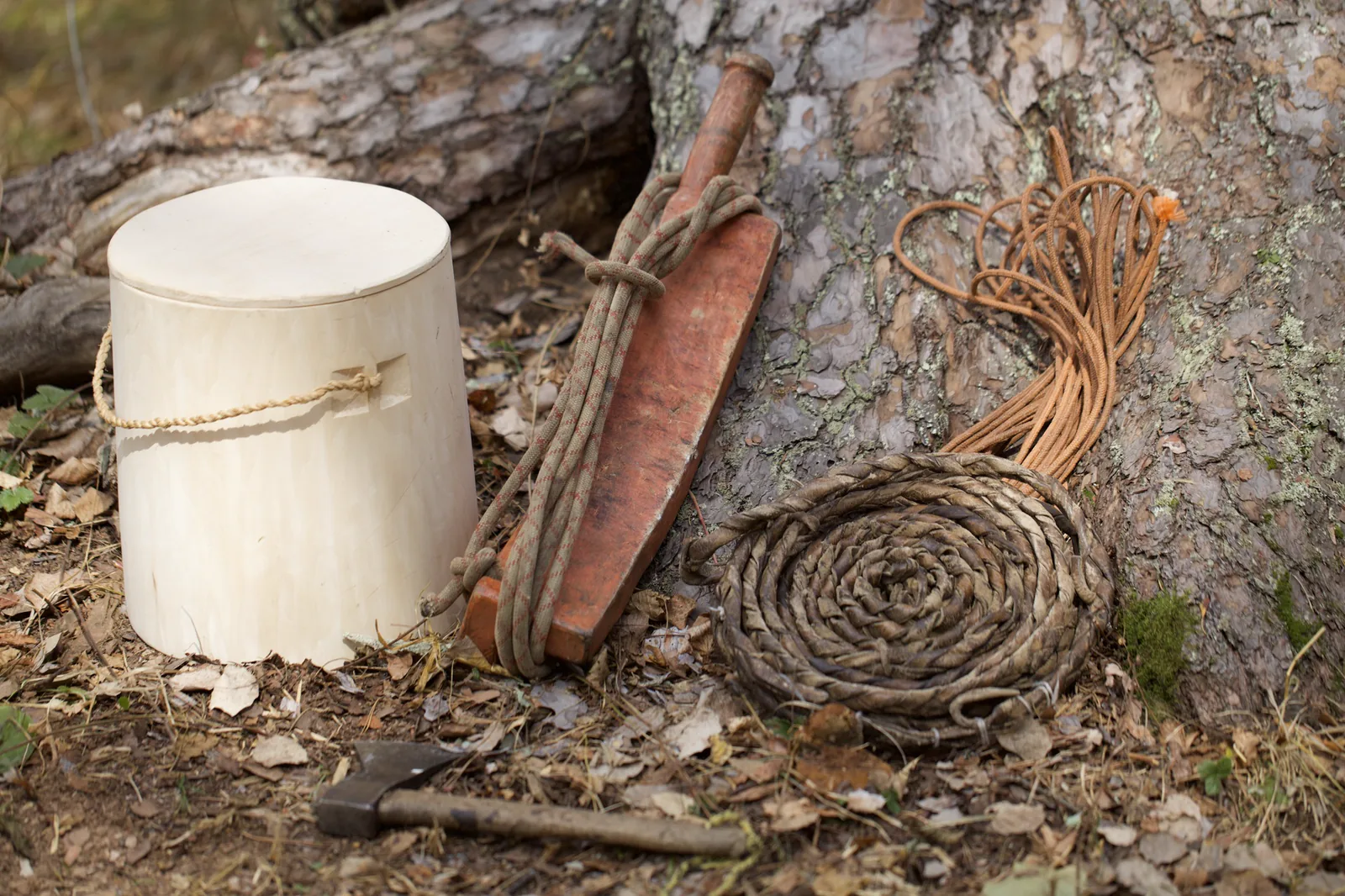 Equipment of the keeper
The photograph shows a lime-wood batman, ropes and a small axe: equipment the keeper takes to the tree.
A close-up of the tamga reveals the lines cut into the pine bark.
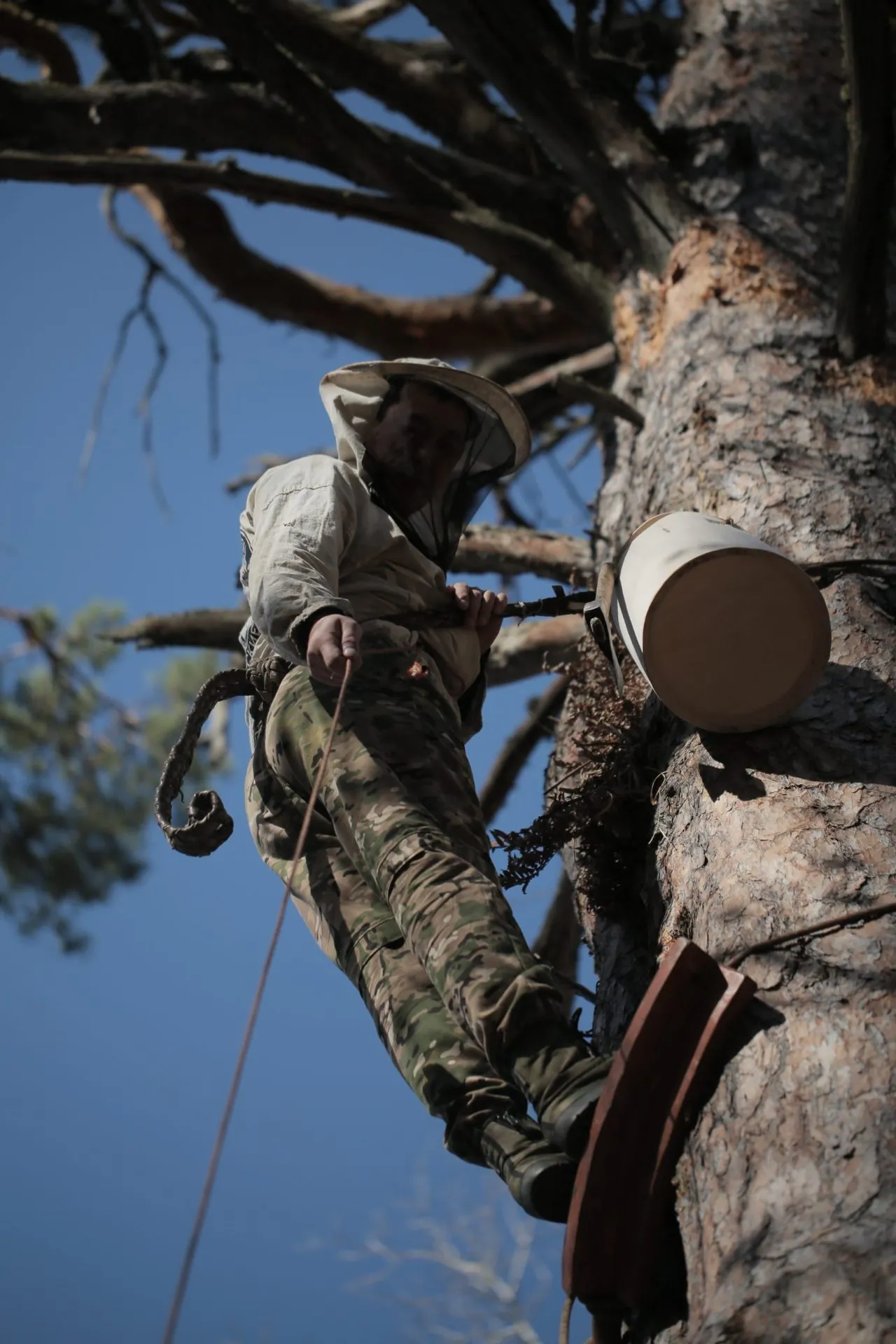
The photograph shows the keeper climbing towards the working opening high above the ground.
The keeper works at the tree hollow, high above the ground. A wide view gives way to a close-up of the hands and movements involved.
Records for the new harvest
After the new harvest, this section will show its volume, batch numbers, analysis results and accompanying documents.
Hear about the new harvestOnline sales are not open yet. Get in touch in the section below to hear how to purchase honey from the new harvest.
The “The craft, up close” section has a film with chapters on equipment, work at the bort and gathering comb. You can jump straight to a chapter.
Message us on WhatsApp and we will let you know when records for the new harvest and purchase terms are available.
A ready-to-send message will open in WhatsApp. You can edit it before sending.
Online sales are not open yet. You can leave an inquiry about the new harvest here.
Other ways to reach us
Email is not yet available. For a reply, please use WhatsApp.
WhatsApp · +7 920 340-22-00 We’re on Instagram